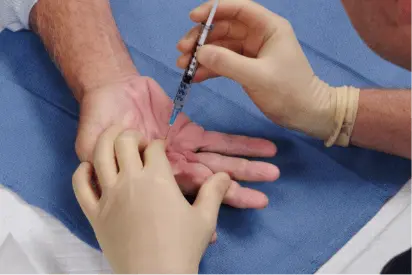
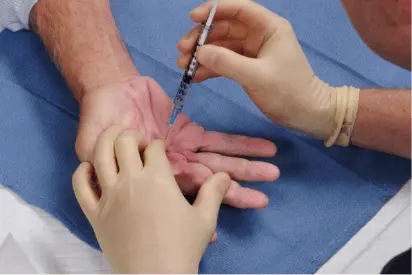
TREATING DUPUYTREN'S CONTRACTURE EARLY with XIAFLEX®—
That's the ElWay

The way I look at it, I’m 3-0 with XIAFLEX®. I would choose XIAFLEX® every time.

John Elway, Hall of Fame quarterback and XIAFLEX® patient

In clinical trials, XIAFLEX® was used to treat 20°-100° MP contractures and 20°-80° PIP contractures.1

JOHN ELWAY'S XIAFLEX® TREATMENT HISTORY

chevron right icon chevron right icon

John Elway thought surgery was his only option, until he got a second opinion

John underwent 18 surgeries during his football career and wanted to avoid another one. After having 3 separate fingers treated with XIAFLEX®, he’s glad a Hand Specialist told him about nonsurgical options.

“In almost every other part of my practice, we try to start with nonsurgical options. In my opinion, Dupuytren’s contracture should be no different.
Dr. Greyson headshot

Mark Greyson, MD, FACS

Assistant Professor; Program Director, PRS Residency; Associate Program Director, Hand Fellowship; Director, Extremity Microsurgery; Interim Director, PRS Hand Surgery; Division of Plastic & Reconstructive Surgery


John Elway thought surgery was his only option, until he got a second opinion

John underwent 18 surgeries during his football career and wanted to avoid another one. After having 3 separate fingers treated with XIAFLEX®, he’s glad a Hand Specialist told him about nonsurgical options.

“In almost every other part of my practice, we try to start with nonsurgical options. In my opinion, Dupuytren’s contracture should be no different.
Dr. Greyson headshot

Mark Greyson, MD, FACS

Assistant Professor; Program Director, PRS Residency; Associate Program Director, Hand Fellowship; Director, Extremity Microsurgery; Interim Director, PRS Hand Surgery; Division of Plastic & Reconstructive Surgery

MP=metacarpophalangeal; PIP=proximal interphalangeal.

References: 1. XIAFLEX. Prescribing information. Rochester, MI: Endo USA, Inc. 2. Hurst LC, Badalamente MA, Hentz VR, et al. Injectable collagenase clostridium histolyticum for Dupuytren’s Contracture. N Engl J Med. 2009;361(10):968-979. doi:10.1056/NEJMoa0810866 3. Atroshi I, Nordenskjöld J, Lauritzson A, et al. Collagenase treatment of Dupuytren’s contracture using a modified injection method: a prospective cohort study of skin tears in 164 hands, including short-term outcome. Acta Orthop. 2015;86(3):310-315. doi:10.3109/17453674.2015.1019782


IMPORTANT SAFETY INFORMATION FOR XIAFLEX®

  • XIAFLEX is contraindicated in patients with a history of hypersensitivity to XIAFLEX or to collagenase used in any other therapeutic application or application method
  • In the controlled and uncontrolled portions of clinical trials in Dupuytren’s contracture, flexor tendon ruptures occurred after XIAFLEX injection. Injection of XIAFLEX into collagen-containing structures such as tendons or ligaments of the hand may result in damage to those structures and possible permanent injury such as tendon rupture or ligament damage. Therefore, XIAFLEX should be injected only into the collagen cord with a metacarpophalangeal (MP) or proximal interphalangeal (PIP) joint contracture, and care should be taken to avoid injecting into tendons, nerves, blood vessels, or other collagen-containing structures of the hand. When injecting a cord affecting a PIP joint of the fifth finger, the needle insertion should not be more than 2 to 3 mm in depth and avoid injecting more than 4 mm distal to the palmar digital crease
  • Other XIAFLEX-associated serious local adverse reactions in the controlled and uncontrolled portions of the clinical studies included pulley rupture, ligament injury, complex regional pain syndrome (CRPS), sensory abnormality of the hand, and skin laceration (tear). In a historically controlled post-marketing trial, the incidence of skin laceration (22%) was higher for subjects treated with two concurrent injections of XIAFLEX compared with subjects treated with up to three single injections in the placebo-controlled premarketing trials (9%). Post-marketing cases of skin laceration requiring skin graft after finger extension procedures and local skin and soft-tissue necrosis, some requiring skin grafting, or other surgical interventions including finger amputation have been reported. Signs or symptoms that may reflect serious injury to the injected finger/hand should be promptly evaluated because surgical intervention may be required
  • Cases of syncope and presyncope have been reported in the post-marketing period in patients treated with XIAFLEX. In most cases in patients with Dupuytren’s contracture, the injection procedure, finger extension procedure, or pain following the procedures were reported as potential triggers for the events, suggesting a vasovagal mechanism. Most, but not all, cases occurred in the immediate treatment period (injection or finger extension procedure) or within 1 to 2 days following the injection or finger extension procedure. If presyncopal symptoms occur, patients should remain recumbent until symptoms resolve. Syncope may be associated with bodily injuries, including concussion, head abrasion, and other accidental injuries
  • In the controlled portions of the clinical trials in Dupuytren’s contracture, a greater proportion of XIAFLEX-treated patients (15%) compared to placebo-treated patients (1%) had mild allergic reactions (pruritus) after up to 3 injections. The incidence of XIAFLEX-associated pruritus increased after more XIAFLEX injections in patients with Dupuytren’s contracture
  • Because XIAFLEX contains foreign proteins, severe allergic reactions to XIAFLEX can occur. Anaphylaxis was reported in a post-marketing clinical trial in one patient who had previous exposure to XIAFLEX for the treatment of Dupuytren’s contracture. Healthcare providers should be prepared to address severe allergic reactions following XIAFLEX injections
  • In the XIAFLEX trials in Dupuytren’s contracture, 70% and 38% of XIAFLEX-treated patients developed an ecchymosis/contusion or an injection site hemorrhage, respectively. Patients with abnormal coagulation (except for patients taking low-dose aspirin, eg, up to 150 mg per day) were excluded from participating in these studies. Therefore, the efficacy and safety of XIAFLEX in patients receiving anticoagulant medications (other than low-dose aspirin, eg, up to 150 mg per day) within 7 days prior to XIAFLEX administration is not known. In addition, it is recommended to avoid use of XIAFLEX in patients with coagulation disorders, including patients receiving concomitant anticoagulants (except for low-dose aspirin)
  • In the XIAFLEX clinical trials for Dupuytren’s contracture, the most common adverse reactions reported in ≥25% of patients treated with XIAFLEX and at an incidence greater than placebo were edema peripheral (eg, swelling of the injected hand), contusion, injection site hemorrhage, injection site reaction, and pain in the injected extremity
  • Post-marketing experience – Syncope and presyncope have been reported in patients treated with XIAFLEX. Most, but not all, cases occurred in the immediate treatment period or within 1 to 2 days following injection. Bodily injuries associated with the syncopal events have been reported

INDICATION

XIAFLEX is indicated for the treatment of adult patients with Dupuytren’s contracture with a palpable cord.

Click for full Prescribing Information and Medication Guide.

IMPORTANT SAFETY INFORMATION FOR XIAFLEX®

  • XIAFLEX is contraindicated in patients with a history of hypersensitivity to XIAFLEX or to collagenase used in any other therapeutic application or application method
  • In the controlled and uncontrolled portions of clinical trials in Dupuytren’s contracture, flexor tendon ruptures occurred after XIAFLEX injection. Injection of XIAFLEX into collagen-containing structures such as tendons or ligaments of the hand may result in damage to those structures and possible permanent injury such as tendon rupture or ligament damage. Therefore, XIAFLEX should be injected only into the collagen cord with a metacarpophalangeal (MP) or proximal interphalangeal (PIP) joint contracture, and care should be taken to avoid injecting into tendons, nerves, blood vessels, or other collagen-containing structures of the hand. When injecting a cord affecting a PIP joint of the fifth finger, the needle insertion should not be more than 2 to 3 mm in depth and avoid injecting more than 4 mm distal to the palmar digital crease
  • Other XIAFLEX-associated serious local adverse reactions in the controlled and uncontrolled portions of the clinical studies included pulley rupture, ligament injury, complex regional pain syndrome (CRPS), sensory abnormality of the hand, and skin laceration (tear). In a historically controlled post-marketing trial, the incidence of skin laceration (22%) was higher for subjects treated with two concurrent injections of XIAFLEX compared with subjects treated with up to three single injections in the placebo-controlled premarketing trials (9%). Post-marketing cases of skin laceration requiring skin graft after finger extension procedures and local skin and soft-tissue necrosis, some requiring skin grafting, or other surgical interventions including finger amputation have been reported. Signs or symptoms that may reflect serious injury to the injected finger/hand should be promptly evaluated because surgical intervention may be required
  • Cases of syncope and presyncope have been reported in the post-marketing period in patients treated with XIAFLEX. In most cases in patients with Dupuytren’s contracture, the injection procedure, finger extension procedure, or pain following the procedures were reported as potential triggers for the events, suggesting a vasovagal mechanism. Most, but not all, cases occurred in the immediate treatment period (injection or finger extension procedure) or within 1 to 2 days following the injection or finger extension procedure. If presyncopal symptoms occur, patients should remain recumbent until symptoms resolve. Syncope may be associated with bodily injuries, including concussion, head abrasion, and other accidental injuries
  • In the controlled portions of the clinical trials in Dupuytren’s contracture, a greater proportion of XIAFLEX-treated patients (15%) compared to placebo-treated patients (1%) had mild allergic reactions (pruritus) after up to 3 injections. The incidence of XIAFLEX-associated pruritus increased after more XIAFLEX injections in patients with Dupuytren’s contracture
  • Because XIAFLEX contains foreign proteins, severe allergic reactions to XIAFLEX can occur. Anaphylaxis was reported in a post-marketing clinical trial in one patient who had previous exposure to XIAFLEX for the treatment of Dupuytren’s contracture. Healthcare providers should be prepared to address severe allergic reactions following XIAFLEX injections
  • In the XIAFLEX trials in Dupuytren’s contracture, 70% and 38% of XIAFLEX-treated patients developed an ecchymosis/contusion or an injection site hemorrhage, respectively. Patients with abnormal coagulation (except for patients taking low-dose aspirin, eg, up to 150 mg per day) were excluded from participating in these studies. Therefore, the efficacy and safety of XIAFLEX in patients receiving anticoagulant medications (other than low-dose aspirin, eg, up to 150 mg per day) within 7 days prior to XIAFLEX administration is not known. In addition, it is recommended to avoid use of XIAFLEX in patients with coagulation disorders, including patients receiving concomitant anticoagulants (except for low-dose aspirin)
  • In the XIAFLEX clinical trials for Dupuytren’s contracture, the most common adverse reactions reported in ≥25% of patients treated with XIAFLEX and at an incidence greater than placebo were edema peripheral (eg, swelling of the injected hand), contusion, injection site hemorrhage, injection site reaction, and pain in the injected extremity
  • Post-marketing experience – Syncope and presyncope have been reported in patients treated with XIAFLEX. Most, but not all, cases occurred in the immediate treatment period or within 1 to 2 days following injection. Bodily injuries associated with the syncopal events have been reported

INDICATION

XIAFLEX is indicated for the treatment of adult patients with Dupuytren’s contracture with a palpable cord.

Click for full Prescribing Information and Medication Guide.

Intended for US Residents Only

Endo Logo Footer


© 2025 Endo, Inc. or one of its affiliates. All rights reserved.

Privacy/Legal XD-07388; XD-07633/March 2026 www.xiaflex.com 1-800-462-ENDO (3636)